

Pallet
Product Overview
A pallet is a critical load-bearing platform used to support goods during storage, handling, and transportation. It provides a defined base for unit loads and allows compatible forklifts, pallet jacks, conveyors, and automated warehouse systems to handle goods seamlessly throughout the global supply chain.
Pallet selection depends on load weight, load distribution, handling equipment, storage configuration, operating environment, and intended service life. Material choice directly governs pallet weight, moisture resistance, cleanability, repair options, and disposal considerations.
Common industrial types include heavy-duty wooden pallets, hygienic plastic pallets, high-capacity steel pallets, and eco-friendly paper pallets. Each type exhibits distinct structural characteristics, and the appropriate option depends entirely on actual operating conditions and verified model specifications.
-
 Galvanized Steel PalletGalvanized Steel Pallet offers the best corrosion protection available. The pallet is dipped in molten zinc after welding. This creates a thick, protective layer.Add to Inquiry
-
 Returnable Steel PalletsReturnable Steel Pallets are designed for closed-loop logistics. These pallets can handle 500 to 1000 cycles or more. This makes them a cost-effective choice for supply chains. Our product use...Add to Inquiry
-
 Double Faced Steel PalletsDouble Faced Steel Pallets offer the highest strength level for steel pallets. These pallets have two load-bearing surfaces. This makes them very rigid and strong.Add to Inquiry
-
 Single Faced Steel PalletsSingle Faced Steel Pallets offer steel strength at a more affordable price. These pallets have one load-bearing surface. This reduces the weight and material cost.Add to Inquiry
-
 Heavy Duty Steel PalletsHeavy Duty Steel Pallets are the strongest option for industrial storage. These pallets use Q235B steel for maximum structural integrity. The dynamic load reaches 2 to 3 tons.Add to Inquiry
-
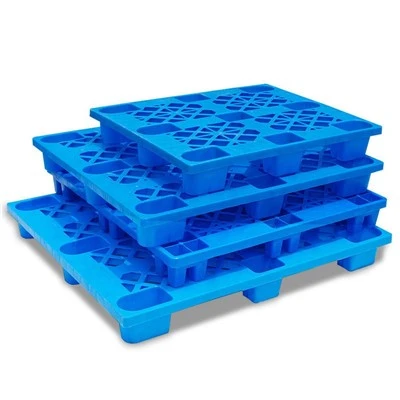 Recycled Plastic PalletsRecycled Plastic Pallets are a sustainable choice for environmentally conscious companies. These pallets use post-consumer recycled HDPE materials. Each pallet keeps about 2-3kg of plastic out of...Add to Inquiry
-
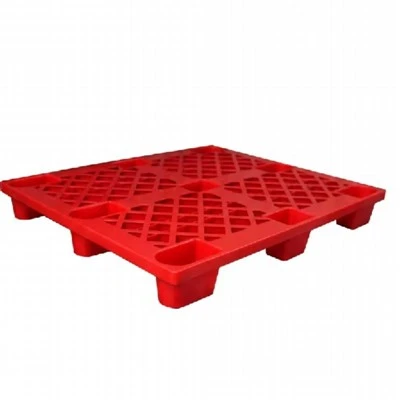 Pallet For ForkliftPallet for Forklift is specially designed for use with forklifts and pallet jacks. These pallets have strong fork entry points. The edges are reinforced to handle repeated contact.Add to Inquiry
-
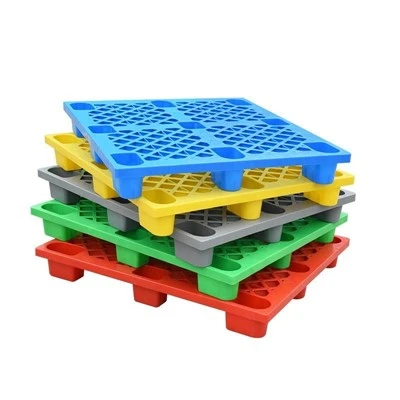 Stackable PalletsStackable Pallets are designed for efficient vertical storage. These pallets have special stacking features on the corners. This allows loaded pallets to sit safely on top of each other. You can...Add to Inquiry
-
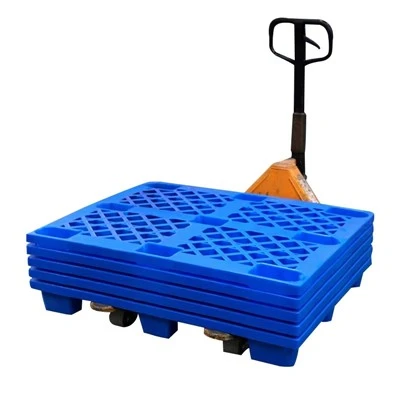 Nested Plastic PalletsNested Plastic Pallets are designed to save space when empty. These pallets stack inside each other when not in use. The nested height is only 25% to 35% of the single pallet height. This saves a...Add to Inquiry
-
 Double Face PalletsDouble Face Pallets are built for heavy-duty storage and high-turnover operations. These pallets have two load-bearing surfaces. You can flip them over and use both sides.Add to Inquiry
-
 Single Face PalletsSingle Face Pallets are the most common pallets in logistics. They are simple, light, and cost-effective. Our product use HDPE material. The standard size is 1200*1000mm.Add to Inquiry
-
 Four Way Plastic PalletsFour Way Plastic Pallets offer the best handling flexibility. You can enter from any of the four sides. This means the forklift does not need to turn around. It saves time and effort in the warehouse.Add to Inquiry


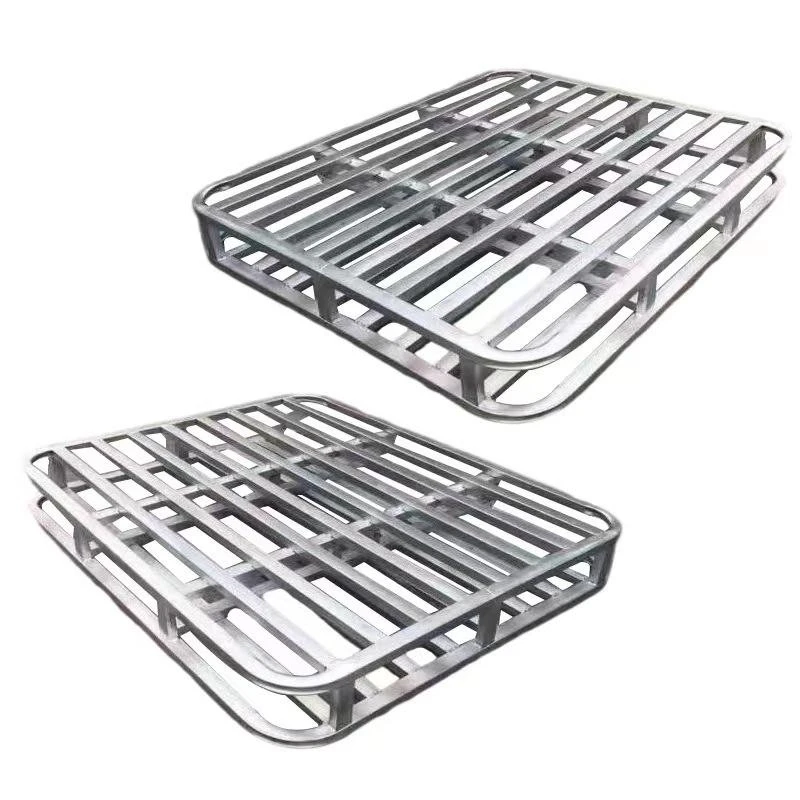
Main Structural Components
Pallet construction varies significantly by material and engineering design. Most industrial pallets combine a load-supporting surface with an undercarriage structure that transfers loads to the floor, handling equipment, or designated storage supports.
Top Deck: The upper surface supporting unit loads or packaging units. Configurations include open slatted surfaces, closed flat tops, or specialized grids. Deck layout and support spacing must match the load footprint and distribution.
Load-Bearing Structure: Stringers, blocks, runners, molded supports, or integrated structural components distribute and transfer forces through the pallet. Their dimensions, arrangement, material properties, and connection integrity dictate performance under specified loading.
Fork Entry and Handling Openings: Openings that provide access for compatible handling equipment. Two-way and four-way entry configurations dictate approach angles and maneuverability, though actual compatibility depends on pallet geometry and equipment dimensions.
Base and Support Points: The undercarriage transferring loads to the floor or storage systems. Crucially, pallets intended for rack storage must be evaluated against the actual rack support arrangement and applicable load rating. Suitability for flat-floor storage does not establish suitability for high-bay racking.
How a Pallet Supports a Load
Goods placed on the deck generate forces that the internal structure transfers to supporting surfaces. Performance is governed by weight distribution, pallet orientation, support span, material degradation, and loading duration.
Concentrated loads, uneven weight distribution, handling impacts, and multi-cycle reuse create loading conditions vastly different from evenly distributed stationary loads. Therefore, static load capacity, dynamic load capacity, and racking load capacity must be evaluated separately. Each rating must correspond to intended use and certified test conditions.
Key Features and Benefits
Application-Matched Load Capacity: Pallet capacity must match actual goods, load distribution, and handling intensity. Buyers should always confirm verified static, dynamic, and racking load ratings rather than relying on a single maximum load figure.
Strict Dimensional Compatibility: Overall length, width, height, fork pocket dimensions, and base geometry ensure seamless integration with standard forklifts, automated guided vehicles, conveyors, and high-bay warehouse systems.
Advanced Material Selection: Wood, plastic, steel, and paper offer tailored balances of strength-to-weight ratios, moisture resistance, chemical cleanability, repairability, and end-of-life recycling.
Storage and Stacking Optimization: Stacking suitability depends on pallet geometry, load stability, and allowable storage heights. Confirm nesting ratios and stacking restrictions for both empty and loaded units.
Extended Service Life and Maintenance: Reusable logistics applications require clear inspection protocols, damage acceptance criteria, repair procedures, and replacement guidelines to maximize asset lifecycle.
Global Transport and Regulatory Compliance: Cross-border logistics demand strict adherence to destination-specific transport regulations, environmental packaging restrictions, and phytosanitary standards.
Applications and Selection Guide
Warehouse Storage and Distribution
For high-density facilities, evaluate dimensions, automated conveyor compatibility, and storage arrangements. Rack-supported applications demand a certified load rating for the exact rack-beam span and must be verified against the warehouse's actual racking hardware.
Manufacturing and Internal Material Handling
Automated manufacturing plants rely on pallets to shuttle components, work-in-process materials, and finished goods. Selection must account for high-frequency handling, load distribution, and exposure to oils, chemicals, moisture, or thermal extremes.
Distribution and Transportation
Logistics operations require analysis of packaged-goods dimensions, gross shipment weight, load stability, and transport vehicle space utilization.
Export Packaging and Global Logistics
Export pallet selection must account for destination import restrictions, shipment gross weight, and harsh transit conditions. For international shipments utilizing wood packaging materials, compliance with ISPM 15 heat-treatment and official IPPC marking standards must be verified prior to dispatch.
Automated Warehousing and Conveyor Systems
Automated systems require strict dimensional consistency and precise handling interfaces. Mechanical and structural tolerances must be verified against system specifications rather than assumed from material type alone.
Technical Specifications and Benchmarks
The following parameters represent baseline industrial criteria to confirm prior to placing an order. Actual product values must be supplied and certified by the manufacturer for the selected model.
|
Technical Parameter |
Specification or Benchmark |
|
Product Category |
Heavy-duty wooden, industrial plastic, structural steel, or paper honeycomb pallet |
|
Material Composition |
Certified wood species and grade, virgin or recycled polymer, carbon steel, or kraft paper |
|
Footprint Dimensions |
Standard sizes such as 1200x1000 mm or Euro 1200x800 mm, or custom engineering |
|
Load Rating Benchmarks |
Certified Static capacity (3000 to 6000 kg), Dynamic capacity (1000 to 2500 kg), and Racking capacities |
|
Deck Configurations |
Open slatted deck, closed flat top, or anti-slip grid design |
|
Base Structure |
Stringers, structural blocks, continuous runners, or molded undercarriage supports |
|
Temperature Range |
Verified thermal parameters from sub-zero cold storage (-25°C) to industrial ambient (+60°C) |
|
Specialized Properties |
ESD-safe, chemical resistant, antimicrobial, or cleanroom compatible additives |
Pallet manufacturing and quality assurance must follow rigorous engineering standards and approved product specifications:
Incoming Material Verification: Automated and manual checks for raw material integrity, including wood moisture content below 20% for kiln-dried lumber, polymer melt flow index, or steel tensile strength.
Precision Component Processing: Multi-axis cutting, automated robotic welding, high-pressure injection molding, or precision fastening to eliminate structural weak points.
Dimensional and Structural Inspection: Verification of fork pocket dimensions, deck flatness, squareness, and connection integrity against approved engineering drawings.
Certified Load Performance Testing: Destructive and non-destructive load testing conducted under standardized protocols to map deflection curves and ultimate breaking thresholds.
Traceability and Batch Identification: Unique batch markings ensuring complete material traceability and quality accountability.

Customization and Technical Support
Pallet specifications can be engineered to integrate with unique automated assembly lines, non-standard product footprints, and specialized supply chain environments.
Custom Dimensions and Geometry: Tailored length, width, height, custom stringer placements, and specialized deck spacing.
Structural Reinforcements: Internal steel tubing integration for high-load racking applications without excessive weight penalty.
Branding and Identification: Molded-in company logos, hot-stamped tracking codes, sequential serial numbers, or integrated RFID and NFC tracking tags.
Application-Specific Adaptation: Tailored chemical resistance, anti-slip surface treatments, and cleanroom compatibility.
Information Required for Custom Inquiries (RFQ Checklist)
To accelerate your technical quotation, please provide:
Application Brief: Industry, type of goods, and expected handling process.
Exact Dimensions and Material Preference: Length, width, height, and preferred material type.
Load Requirements: Static, dynamic, and racking weight parameters with distribution profile.
Handling and Storage Method: Forklift type, pallet jack clearance, and rack beam span.
Operating Environment: Temperature, moisture, cleaning, or chemical exposure.
Order Volume and Destination: Initial quantity, annual forecast, and delivery destination port.
Required Documentation: Drawings, test reports, or compliance certificates.
FAQ

Request a Technical Quotation (RFQ)
Ready to optimize your supply chain with engineered, high-reliability pallets? Submit your operational specifications to our engineering sales team:
Product Type and Preferred Material
Required Dimensions (Length x Width x Height)
Gross Goods Weight and Load Distribution Profile
Static, Dynamic, and Racking Load Requirements
Handling Equipment and Storage System Configuration
Operating Environment and Special Performance Requirements
Target Initial Order Quantity and Estimated Annual Demand
Destination Port and Delivery Location
Required Engineering Drawings, Test Reports, and Compliance Documents
As one of the most professional pallet manufacturers and suppliers in China, we warmly welcome you to wholesale customized pallet at competitive price from our factory. If you have any enquiry about quotation, please feel free to email us.
Aluminum Pallet Rack, pallet, Warehouse metal storage pallet